Granny Hexagon Cardigan Crochet Guide
By Lara Yanki · September 28, 2026 · Updated October 4, 2026 · in Wearables
A granny hexagon cardigan uses two expanding hexagons that fold into the two halves of a garment.
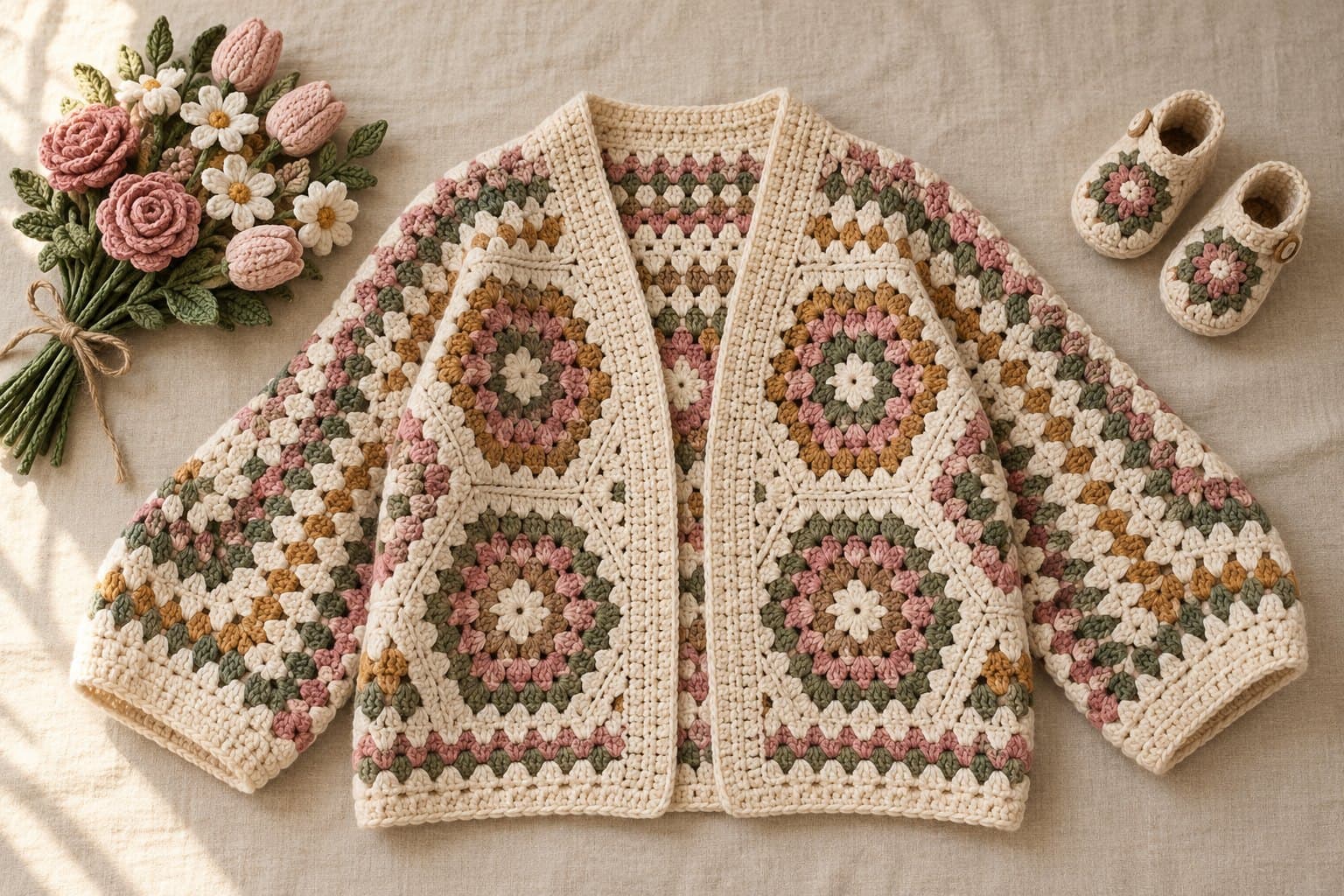
AI-generated illustration. Your finished project may look different.
Design guide: This article explains construction and styling choices. It is not a complete stitch-by-stitch pattern; use a numbered pattern suited to your measurements when making the project.
A granny hexagon cardigan uses two expanding hexagons that fold into the two halves of a garment. Each folded piece forms part of the body and a sleeve. The construction is different from joining a grid of granny squares, so the fitting checks happen at different stages.
Make Two Matching Hexagons
Choose a hexagon cardigan pattern with a specified cluster repeat. Mark all six corners and work the same number of rounds on both pieces. Keep the corner treatment consistent: a missed corner increase can prevent the piece from folding into the intended shape.
Match the yarn and hook for the two halves. If you change colors, write down the round order so both sleeves begin with the same sequence.
Check the Fold Early
Fold a sample hexagon into the garment-half shape described in your pattern. The fabric may look unusual when spread completely flat; assess it in the folded position as well. Compare the sleeve depth and body width before continuing with many more rounds.
The hexagon controls several measurements at once. Adding rounds increases more than just body width, so a cardigan pattern may use extra rows later to extend the body or sleeves independently.
Join the Halves and Refine the Fit
Follow the pattern's shoulder and back seam arrangement. Mark the joins first, try the folded pieces around your shoulders and check that the two halves align. Add back extensions, lower-body rows or sleeve extensions only where the garment plan allows.
Do not make one whole hexagon larger simply to correct a narrow back; that can also create mismatched sleeves.
Finish the Front and Cuffs
Add a front band after the body is joined so it runs continuously around the opening. If narrowing a sleeve cuff, spread the shaping across the cuff round rather than gathering one side. For a cardigan with separately planned square panels, see the modern granny-square cardigan.
More in Wearables
Crochet Balaclava Guide: Modern Winter Hood for Beginners
A balaclava needs a clear face opening, comfortable neck coverage and enough room around the crown.
2 min read
Crochet Cable Sweater Guide: Cozy Textured Fall Pullover
Crochet cables use raised stitches to create crossing lines.
2 min read
Crochet Cowl Guide for Beginners: Cozy Fall Accessory
A beginner cowl can be made from a ribbed rectangle joined into a loop.
2 min read